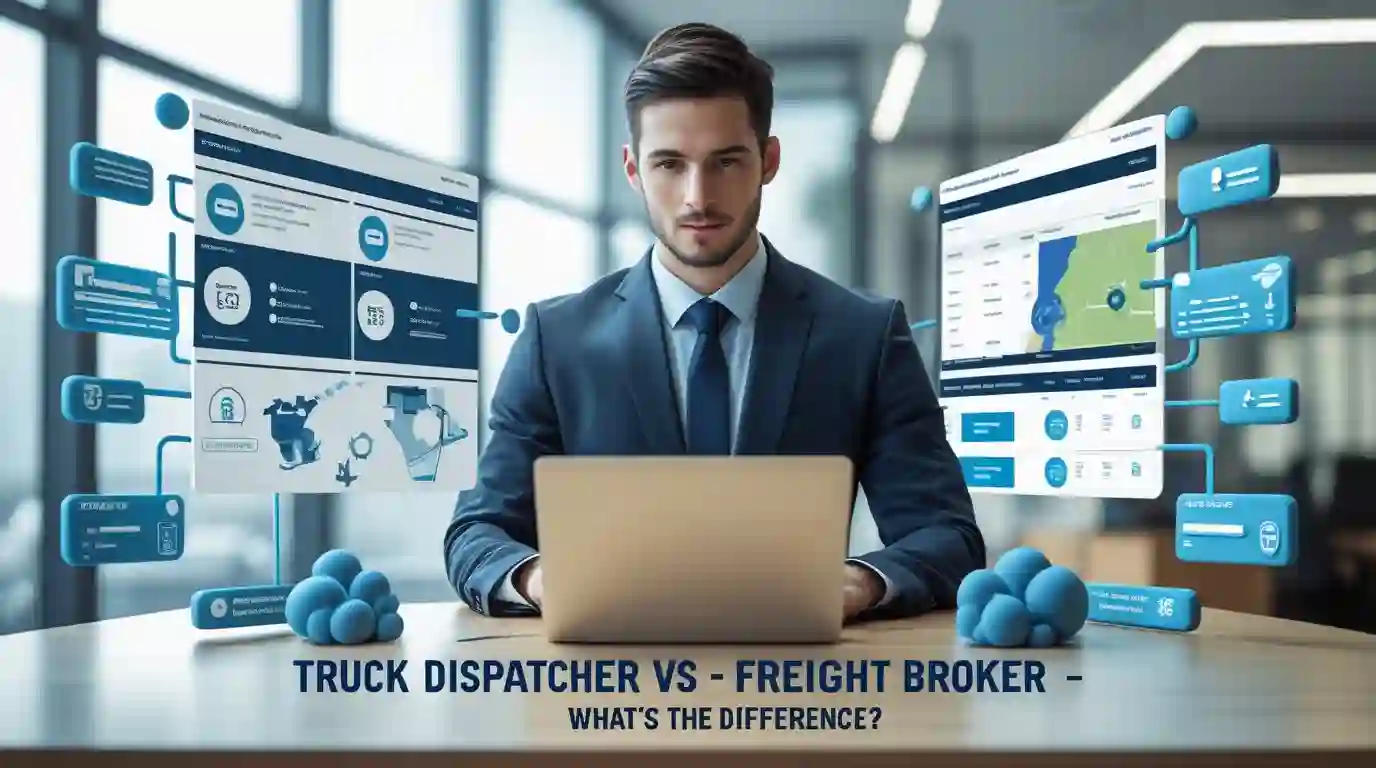
If you're exploring careers in the trucking industry or considering logistics training in Pakistan, you've probably heard about truck dispatchers and freight brokers. While both play crucial roles in transportation logistics, they operate differently, earn differently, and require different skill sets. This guide breaks down everything you need to know about the dispatcher vs broker trucking comparison to help you make an informed career choice.
What is a Truck Dispatcher?
A truck dispatcher works directly with trucking companies and owner-operator truckers to coordinate their daily operations. Think of them as the command center for truck drivers. They handle route optimization, find loads on load board platforms, communicate delivery schedules, and ensure drivers stay on track.
The dispatcher job involves managing carrier operations without owning any freight or making deals with shippers. They're employed by trucking companies or work as independent contractors serving multiple carriers. Their main goal is keeping trucks moving efficiently and maximizing driver earnings through smart load matching and logistics coordination.
Daily Tasks of a Dispatcher
Truck dispatchers start their day checking available loads, communicating with drivers about their current locations, and planning the most efficient routes. They negotiate detention time and layover fees when drivers face delays, track GPS locations, handle paperwork like rate confirmation sheets and proof of delivery, and resolve issues that pop up on the road.
They also manage deadhead miles (empty truck travel), coordinate drop and hook operations, arrange live load and unload appointments, and maintain constant communication with drivers through phone calls and dispatch software.
What is a Freight Broker?
A freight broker acts as the middleman between shippers who need to move goods and carriers who have trucks available. Unlike dispatchers, brokers don't work for trucking companies. Instead, they run their own freight brokerage businesses, connecting companies that need shipping services with carriers who can haul the freight.
Freight brokers must obtain Federal Motor Carrier Safety Administration (FMCSA) authority, including an MC authority number and broker bond requirement (currently $75,000 in the US). They build relationships with both shippers and carriers, negotiate freight rates, and earn money through commission on each load they broker.
Daily Tasks of a Broker
A freight broker's workflow focuses on sales and relationship building. They spend time calling potential shippers to offer freight services, posting available loads on platforms like DAT and Truckstop.com, vetting carriers for carrier compliance and insurance requirements, negotiating rates with both parties, and processing documentation including bill of lading and rate confirmations.
Brokers also handle freight factoring arrangements, manage customer service issues, build their shipper connections, and work on growing their business. The broker workflow requires strong negotiation skills and business development abilities.
The Main Difference Between a Truck Dispatcher and Freight Broker
Here's the core distinction: A truck dispatcher works FOR carriers to manage their operations, while a freight broker works WITH both shippers and carriers as an independent middleman.
Dispatchers don't own the freight or negotiate with shippers directly. They optimize existing contracts and loads for the trucking companies they serve. Brokers, on the other hand, find freight from shippers, negotiate prices, then match that freight with available carriers.
Think of it this way: If trucking companies were restaurants, dispatchers would be the kitchen managers making sure food gets made efficiently, while brokers would be food delivery platforms connecting customers with restaurants.
Truck Dispatcher vs Freight Broker: Key Differences
Licensing Requirements
Do truck dispatchers need a license? No, dispatchers don't need special federal licensing. Anyone can start offering dispatch services after proper training. You don't need an LLC to be a truck dispatcher, though forming a business entity helps with credibility.
Do freight brokers need a license? Yes, absolutely. Freight brokers must register with the FMCSA, obtain Department of Transportation (DOT) authority, secure an MC number, and post a $75,000 broker bond. This process takes weeks and involves significant paperwork and fees.
Income and Earnings
How much does a truck dispatcher make? Dispatchers typically charge 5-10% of each load's gross revenue or a flat weekly fee per truck (usually $100-$300 per week). An independent truck dispatcher managing 10 trucks could earn $4,000-$12,000 monthly. Working for a company, dispatcher salaries range from $35,000-$55,000 annually in the US.
How much does a freight broker earn? Freight brokers work on higher margins but have more expenses. They typically earn 10-20% commission on each load. A successful broker handling $50,000 in weekly freight could net $5,000-$10,000 in weekly gross profit. However, freight broker commission gets reduced by operating costs including bond payments, insurance, software, and marketing.
In the difference between freight broker and truck dispatcher salary comparison, brokers have higher earning potential but also higher risk and startup costs.
Skills Required
What skills do you need to be a truck dispatcher? Strong communication abilities, multitasking capacity, problem-solving under pressure, basic geography knowledge, understanding of DOT regulations and Hours of Service rules, customer service skills, and familiarity with TMS (Transportation Management System) software.
What skills do you need to be a freight broker? Everything dispatchers need, plus sales and marketing abilities, negotiation expertise, business management skills, financial understanding, network building capabilities, and persistence in growing client relationships.
Work Environment
Can I work from home as a truck dispatcher? Yes, dispatching is perfect for remote work. You only need a computer, phone, internet connection, and dispatch software. Many truck dispatcher jobs in Karachi, Lahore, and Islamabad allow remote work, making it accessible for Pakistani students wanting to work with US-based carriers.
Can I work from home as a freight broker? Absolutely. Freight brokerage is also remote-friendly, though building shipper connections often benefits from in-person networking, especially when starting out.
Startup Costs
Starting a truck dispatching business requires minimal investment: a computer, reliable internet, dispatch software subscription ($50-$200/month), and possibly a truck dispatcher training course online ($300-$2,000). Total startup: under $3,000.
Starting a freight broker business demands significantly more: FMCSA authority filing fees ($300), broker bond ($75,000 - though you can pay premiums of $3,000-$7,000 annually), freight broker software ($200-$500/month), insurance, marketing budget, and working capital. Total startup: $15,000-$30,000 minimum.
Can a Truck Dispatcher Also Be a Freight Broker?
Yes, but they're separate businesses requiring different approaches. Some entrepreneurs start with dispatching to learn the industry, then add brokerage once they understand the market. However, you cannot broker freight for the same carriers you dispatch for without disclosing this relationship, as it creates a conflict of interest.
The independent truck dispatcher vs freight broker decision often comes down to capital availability and risk tolerance. Dispatching offers lower barriers to entry, while brokering offers higher profit potential with more complexity.
Which Career is Better: Dispatcher or Broker?
The dispatcher vs broker trucking choice depends on your situation:
Choose dispatching if you:
Choose brokerage if you:
Many successful logistics professionals start as dispatchers, gain industry knowledge, build networks, then transition to brokerage. This path reduces risk while building expertise.
Training and Education Options
How Long Does It Take to Become a Truck Dispatcher?
Most people can become job-ready dispatchers in 2-4 weeks through focused training. Online truck dispatcher courses cover load boards, route planning, carrier management, communication protocols, dispatch software, and DOT Hours of Service rules.
The best truck dispatcher course in Pakistan should include practical training with real dispatch scenarios, access to dispatch software, understanding of US trucking regulations, and ideally job placement assistance or connections to US-based carriers.
How Long Does It Take to Become a Freight Broker?
Becoming a licensed freight broker takes 1-3 months minimum, including training time (4-8 weeks), FMCSA application processing (2-4 weeks), and setting up your business infrastructure. Comprehensive freight broker training covers sales techniques, load negotiation, shipper prospecting, carrier vetting, compliance requirements, and business management.
Training Opportunities in Pakistan
Pakistani students increasingly pursue careers as US-based truck dispatchers and freight brokers, working remotely. Can Pakistani students become US truck dispatchers? Absolutely. The trucking industry Pakistan professionals can serve American carriers from home, earning in dollars while living in Pakistan.
Truck Dispatcher Course Islamabad: The Institute of Digital Trainings (IDT) in Islamabad offers comprehensive dispatcher certification programs covering all aspects of truck dispatching, including software training and carrier connection assistance.
Truck Dispatcher Course Karachi: Several logistics training Karachi centers provide dispatcher training, though IDT's program stands out for its practical focus and industry connections.
Truck Dispatcher Course Lahore: Lahore also offers dispatcher training Lahore options, with various trucking academy Lahore institutions entering the market as demand grows.
The dispatcher certification Islamabad programs at IDT include certification upon completion, ongoing support, and introduction to potential carrier clients, making it the best dispatcher training Pakistan option for serious students.
Software and Tools
What Software Do Truck Dispatchers Use?
Dispatchers rely on several types of technology: load board platforms like DAT and Truckstop.com for finding freight, TMS software for managing operations and documentation, GPS tracking systems for monitoring truck locations, communication tools including phone systems and messaging apps, and route planning software for optimization.
Popular dispatch software includes Axon, TruckingOffice, and ProTransport for smaller operations, or enterprise systems like McLeod and TMW for larger fleets.
What Software Do Freight Brokers Use?
Freight brokers use similar tools but with additional capabilities: load boards for posting and finding freight, broker-specific TMS systems, CRM systems for managing shipper relationships, carrier vetting services for checking authority and insurance, and accounting software for invoicing and payment tracking.
Leading broker software includes Turvo, LoadOps, and AscendTMS, which integrate load management, carrier communication, and financial tracking.
Real-World Success Stories
Many Pakistani professionals have built successful remote careers in truck dispatching. Graduates of the truck dispatcher course Pakistan programs at institutes like IDT report earning $500-$2,000 monthly working part-time hours, with full-time dispatchers earning $2,000-$5,000+ managing multiple trucks.
The key to success as a dispatcher lies in building trust with owner-operators, consistently finding profitable loads, maintaining excellent communication, and using load boards effectively to maximize truck utilization.
Freight brokers starting from Pakistan face more challenges due to licensing requirements and the need for US business infrastructure, but several have successfully established operations, partnering with US-based entities for compliance while handling operations remotely.
Future Career Opportunities
The trucking industry continues growing, with the American Trucking Associations reporting driver shortages and increasing freight volumes. This growth creates demand for skilled dispatchers and brokers who can efficiently manage logistics operations.
Truck dispatching offers clear career progression: starting as a dispatcher for a company, becoming an independent dispatcher serving multiple carriers, eventually building a dispatch team, then potentially transitioning to freight brokerage.
Freight brokering offers scalability: starting as a solo broker, building a book of business, hiring additional agents or brokers, and eventually running a full 3PL (Third-Party Logistics) operation offering comprehensive freight services.
Both careers provide opportunities to work remotely, serve international markets, and build location-independent businesses, making them particularly attractive for Pakistani professionals seeking dollar-earning opportunities.
Why Choose IDT for Your Logistics Training?
The Institute of Digital Trainings in Islamabad stands out as Pakistan's leading provider of truck dispatcher training for several reasons:
Comprehensive Curriculum: IDT's dispatcher certification Islamabad program covers everything from load board navigation to DOT regulations, with practical software training included.
Industry Connections: IDT maintains relationships with US-based trucking companies and owner-operators, helping graduates find their first clients.
Practical Focus: Rather than just theory, IDT emphasizes hands-on training with real dispatch scenarios and software practice.
Affordable Investment: The truck dispatcher course fees at IDT remain competitive while delivering exceptional value through job placement support.
Ongoing Support: Graduates receive continued guidance even after completing the course, with help troubleshooting issues and growing their dispatch businesses.
Proven Results: IDT graduates consistently report success in landing dispatch positions and building profitable independent dispatch businesses.
Whether you're in Islamabad, Karachi, Lahore, or elsewhere in Pakistan, IDT's online truck dispatcher certification makes professional logistics training accessible.
Frequently Asked Questions
What is the main difference between a truck dispatcher and freight broker?
The core difference is that truck dispatchers work directly for trucking companies or carriers to manage their daily operations and find loads for their trucks. Freight brokers act as independent middlemen who connect shippers needing freight moved with carriers who have capacity, earning commission by facilitating these connections. Dispatchers manage operations, while brokers make deals.
Which pays more: truck dispatcher or freight broker?
Freight brokers generally have higher earning potential, with successful brokers earning $70,000-$150,000+ annually compared to dispatchers earning $35,000-$60,000 as employees or $50,000-$100,000 as independent contractors. However, brokers face higher startup costs and business risks, while dispatchers enjoy more stable, predictable income with lower overhead.
Do I need a license to be a truck dispatcher?
No, truck dispatchers don't need federal licensing or special permits. You can start offering dispatch services immediately after training. However, freight brokers must obtain FMCSA authority, an MC number, and post a $75,000 bond before legally brokering freight.
Can I work from home as a truck dispatcher in Pakistan?
Yes, truck dispatching is an ideal remote career for Pakistani professionals. You can work with US-based carriers from anywhere with reliable internet, earning in dollars while living in Pakistan. Many graduates of the truck dispatcher course Pakistan programs successfully work remotely for American trucking companies.
How much does truck dispatcher training cost?
Quality truck dispatcher courses typically cost $300-$2,000 depending on comprehensiveness and support provided. The truck dispatcher course fees at IDT in Islamabad offer excellent value with practical training, software access, and job placement assistance included.
Is truck dispatching easier than freight brokering?
Generally yes, truck dispatching has lower barriers to entry, no licensing requirements, simpler startup process, and more straightforward operations. Freight brokering requires sales skills, more regulatory compliance, higher capital investment, and involves managing relationships with both shippers and carriers simultaneously.
Conclusion: Start Your Logistics Career Today
Understanding the difference between dispatcher and broker roles helps you choose the right path for your career goals and circumstances. Both offer legitimate opportunities to build profitable businesses in the growing transportation logistics sector.
For most people starting out, especially in Pakistan, truck dispatching provides the most accessible entry point: low startup costs, quick training timeline, remote work opportunities, and steady income potential. Once you've gained industry experience and built capital, you can always expand into freight brokerage if desired.
The trucking industry needs skilled professionals who understand carrier management, load optimization, and logistics coordination. Whether you choose dispatching or brokerage, proper training makes all the difference in your success.
Ready to start your logistics career? Book your seat in the Advanced Truck Dispatching Course offered by the Institute of Digital Trainings (IDT) in Islamabad. With comprehensive training, practical software experience, and job placement support, IDT gives you everything needed to launch a successful truck dispatching career from Pakistan.
Don't wait to explore this lucrative, remote-friendly career opportunity. Explore Advanced IT and Logistics Courses at the Institute of Digital Trainings Islamabad and take the first step toward financial independence through truck dispatching.
The transportation logistics industry offers real opportunities for Pakistani professionals willing to learn and work hard. Start your journey today.